Slinfra Developers Home

Category

Project Management

11 articles

Closer to Home: How Regional Sourcing Strategies Are Reshaping Infrastructure Procurement from the Ground Up

Closer to Home: How Regional Sourcing Strategies Are Reshaping Infrastructure Procurement from the Ground Up

Global supply chain disruptions have forced US infrastructure developers to reconsider procurement models built on the assumption of reliable international sourcing. Across the country, a growing number of firms are turning to regional manufacturing networks and locally available materials not merely as a contingency measure, but as a deliberate competitive strategy. The shift carries real tradeoffs—but for those who navigate it well, the advantages in schedule reliability and project risk manag

Scale Breaks Things: Understanding Why Infrastructure Megaprojects Collapse Beyond the Half-Billion-Dollar Mark

Scale Breaks Things: Understanding Why Infrastructure Megaprojects Collapse Beyond the Half-Billion-Dollar Mark

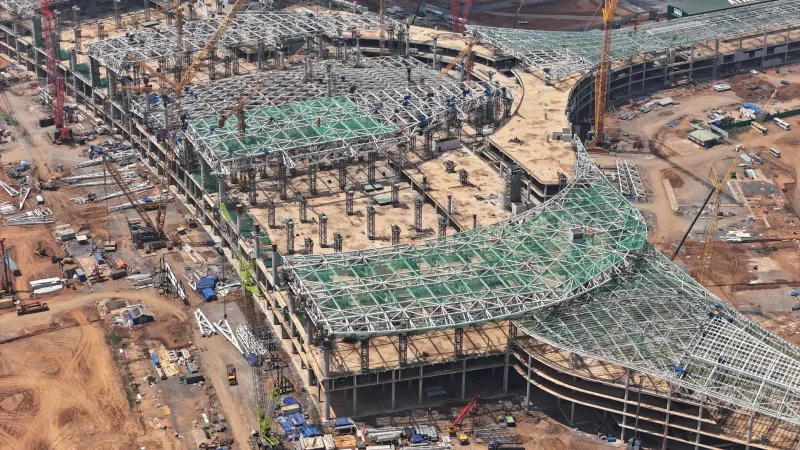
When infrastructure projects cross the $500 million threshold, the rules change in ways that most enterprise developers fail to anticipate. The organizational and technical pressures that emerge at this scale are not merely larger versions of smaller-project challenges — they represent a fundamentally different management environment. Understanding where control breaks down, and why, is the first step toward building governance structures capable of surviving it.

When the Left Hand Doesn't Know What the Right Hand Is Building: The True Cost of Organizational Fragmentation in Infrastructure Programs

When the Left Hand Doesn't Know What the Right Hand Is Building: The True Cost of Organizational Fragmentation in Infrastructure Programs

Disconnected teams, competing decision-making authorities, and entrenched departmental silos quietly inflate infrastructure program costs far beyond what most enterprise clients anticipate. Understanding how organizational structure itself becomes a liability—and what integrated delivery frameworks can do to correct it—is increasingly essential for owners who expect predictable outcomes at scale.

The Stakeholder Equation: Why Community Relationships Determine Infrastructure Project Outcomes Before Construction Begins

The Stakeholder Equation: Why Community Relationships Determine Infrastructure Project Outcomes Before Construction Begins

Local opposition, environmental advocacy, and community skepticism have derailed or significantly delayed some of the most technically sound infrastructure programs in the United States. The developers who consistently deliver on schedule are not those who outmaneuver community concerns — they are the ones who address those concerns before they become obstacles. This article makes the case for genuine stakeholder engagement as a project management discipline, not a public relations exercise.

Building the Builders: Rethinking How Infrastructure Developers Compete for Skilled Labor in a Depleted Market

Building the Builders: Rethinking How Infrastructure Developers Compete for Skilled Labor in a Depleted Market

The skilled labor shortage in infrastructure construction has moved well beyond a cyclical tightening — it now represents a structural challenge that threatens the viability of the nation's most ambitious development programs. Wage pressure, demographic attrition, and competition from adjacent sectors have created a workforce market that punishes developers who rely on traditional recruitment and retention models. Slinfra Developers offers a frank assessment of the crisis and a framework for bui

Beyond the Single Source: Engineering Supply Chain Resilience for Large-Scale Infrastructure Programs

Beyond the Single Source: Engineering Supply Chain Resilience for Large-Scale Infrastructure Programs

Commodity volatility, labor market disruptions, and geopolitical instability have exposed the fragility of conventional infrastructure supply chains—often at the worst possible moment in a project lifecycle. Building redundancy into material and labor pipelines from the outset is no longer a risk management exercise; it is a strategic differentiator that separates enterprises capable of executing at scale from those perpetually vulnerable to forces outside their control.

Stuck in the System: How Infrastructure Developers Can Break Free from Regulatory Gridlock

Stuck in the System: How Infrastructure Developers Can Break Free from Regulatory Gridlock

Permitting delays remain one of the most underestimated threats to large-scale infrastructure timelines, routinely adding years and millions of dollars to projects that are otherwise shovel-ready. Understanding where approvals stall—and why—is the first step toward reclaiming control of the schedule. This article examines the structural causes of regulatory gridlock and the planning strategies that experienced teams use to navigate it.

From Fabrication Facility to Operational Asset: How Modular Construction Is Compressing Enterprise Infrastructure Timelines

From Fabrication Facility to Operational Asset: How Modular Construction Is Compressing Enterprise Infrastructure Timelines

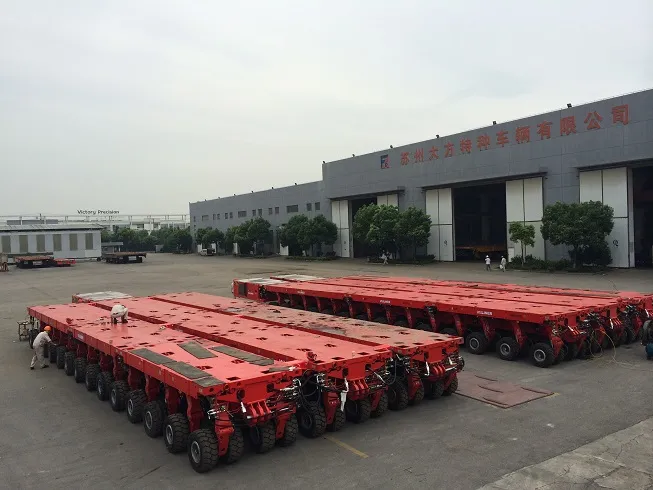
Prefabricated and modular construction methodologies are fundamentally altering the economics and scheduling dynamics of large-scale infrastructure delivery in the United States. For enterprise clients who have historically planned around multi-year build cycles, the shift to off-site fabrication is producing measurable gains in both cost efficiency and time-to-operational status. This article examines the mechanics, data, and strategic implications of modular infrastructure development for orga

The Hidden Complexity: Five Project Phases Enterprise Clients Consistently Underestimate in Large-Scale Infrastructure Development

The Hidden Complexity: Five Project Phases Enterprise Clients Consistently Underestimate in Large-Scale Infrastructure Development

Large-scale infrastructure projects routinely exceed their original budgets and timelines—not because of engineering failures, but because of planning oversights that compound into costly crises. From environmental assessments conducted too narrowly to post-completion optimization left entirely unaddressed, enterprise clients frequently enter the development process without fully appreciating where the hidden complexity lies. This guide examines five critical phases that deserve far more attenti